Course details
Copies of lecture notes appear here for
reference. You will find the course harder if you don't
create your own written version of these notes, so try to do that rather than simply read the material.
All the slides can be found in a single pdf here.
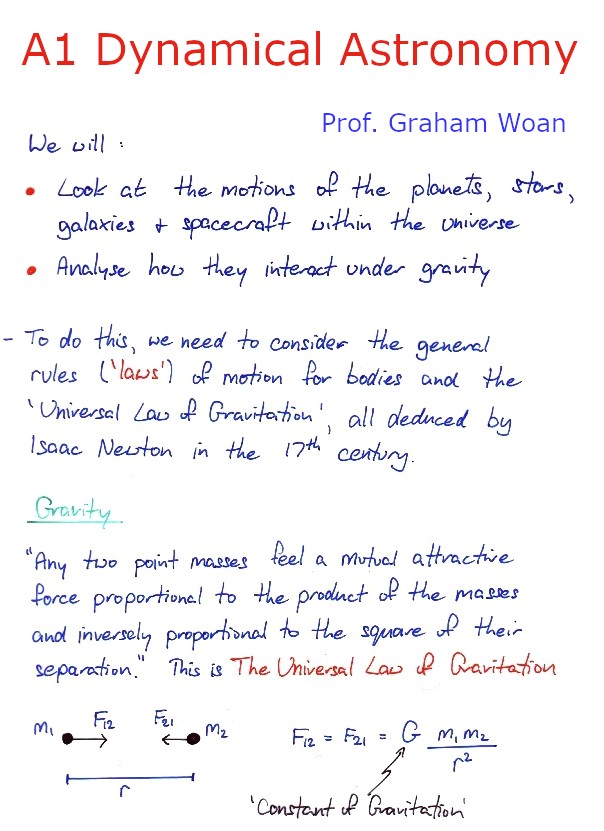
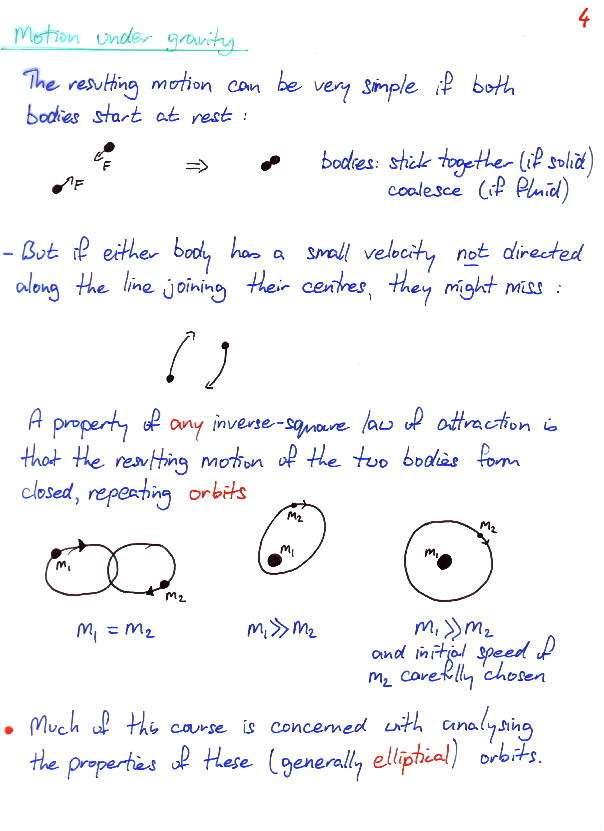
Introduction Motion under gravity; gravity as a long
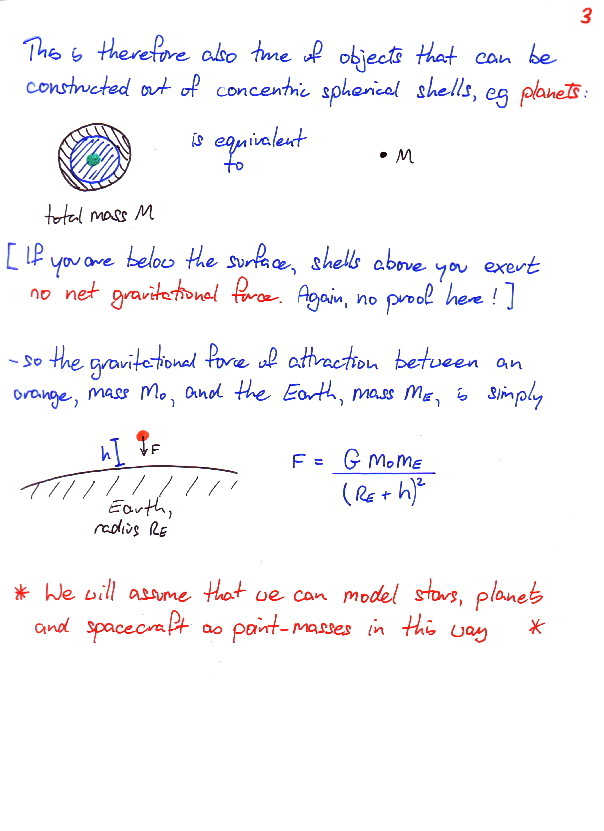
range force; Newton's Law of Universal Gravitation; gravitational
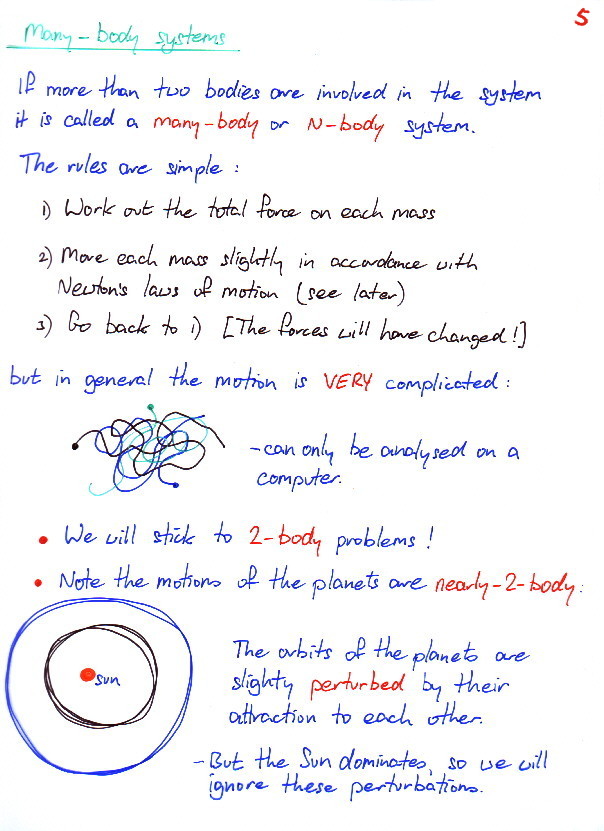
attraction of spherical bodies; 1, 2 and n-body interactions; Kepler's
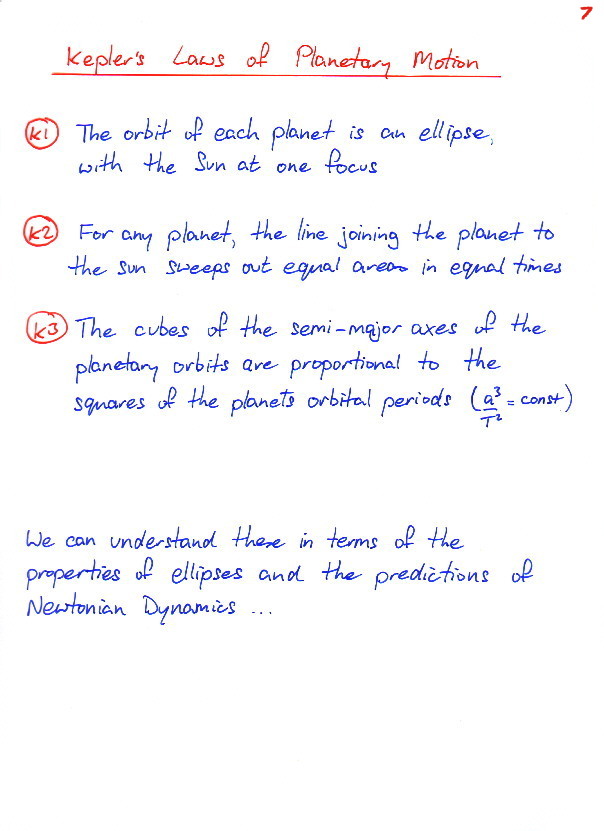
Laws of planetary motion
Pictures: [ galaxy
M83 | globular
cluster 47 Tuc ]
Handouts:[ quick facts #1: orbital
motion | force from a
spherical body (not examinable) | Newton's
Principia | Newton's "A Treatise of the System of the World" ]
Animations[Stars
at the centre of the Galaxy, more
| Newton's
cannon | Cassini's
orbits | orbit
simulations ]
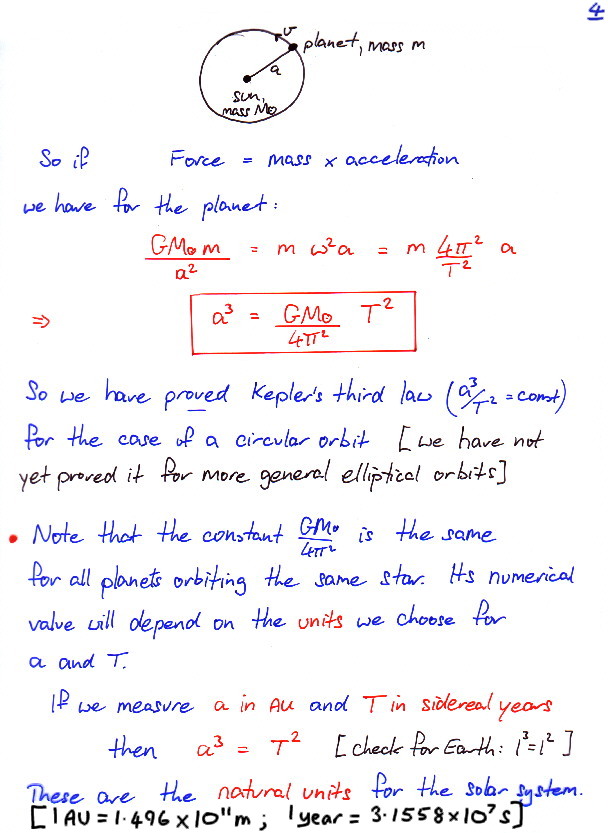
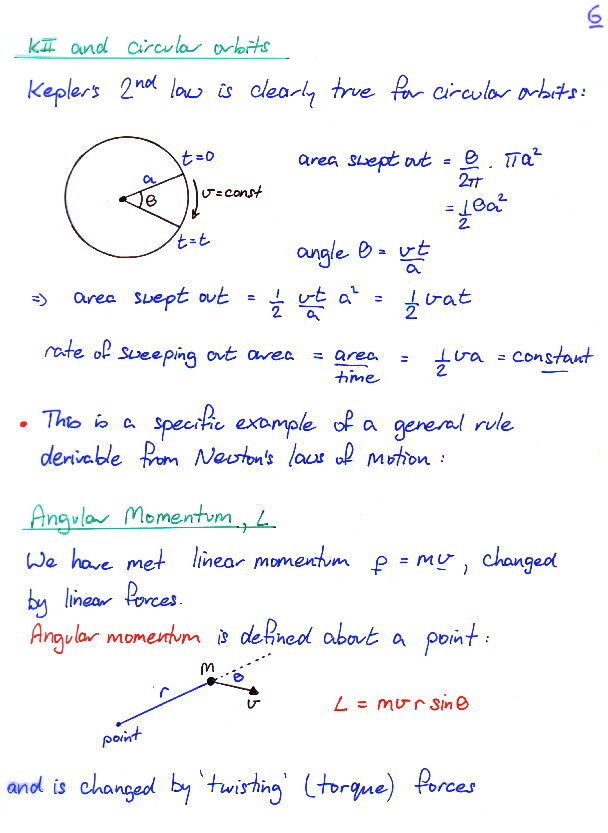
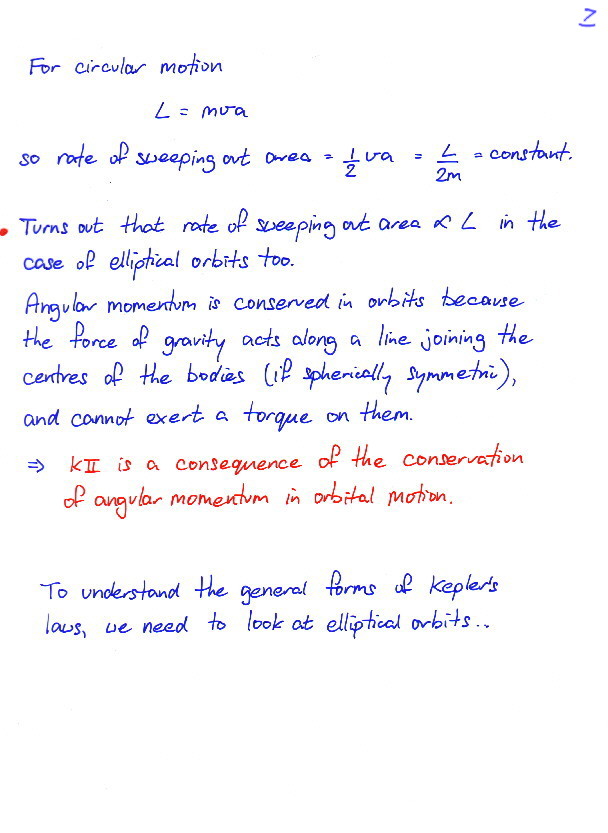
Planetary motion Newton's laws of
motion; linear momentum; circular motion; angular velocity;
centripetal acceleration; orbital period; Kepler's laws derived for
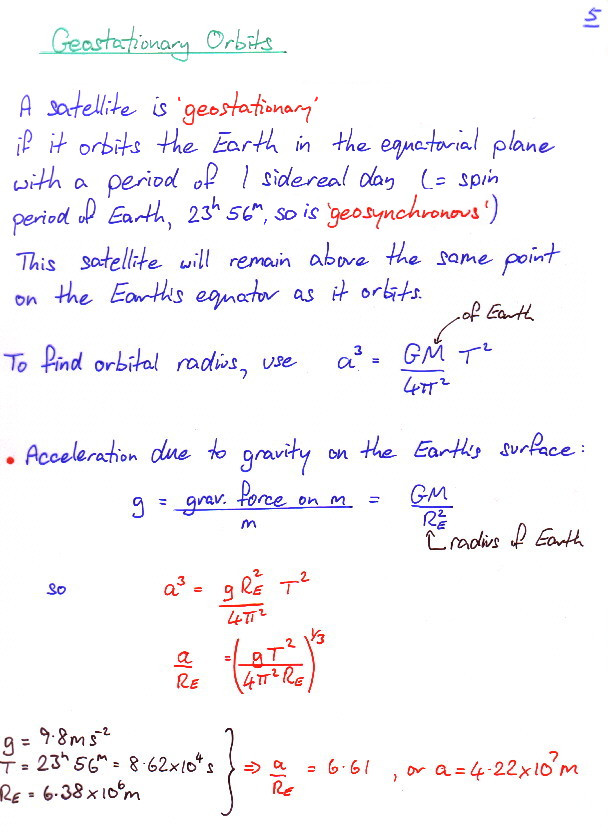
circular orbits; natural units for the solar system; geostationary
orbits; angular momentum
Animation: [geostationary
orbit | Kepler 2 simulation ]
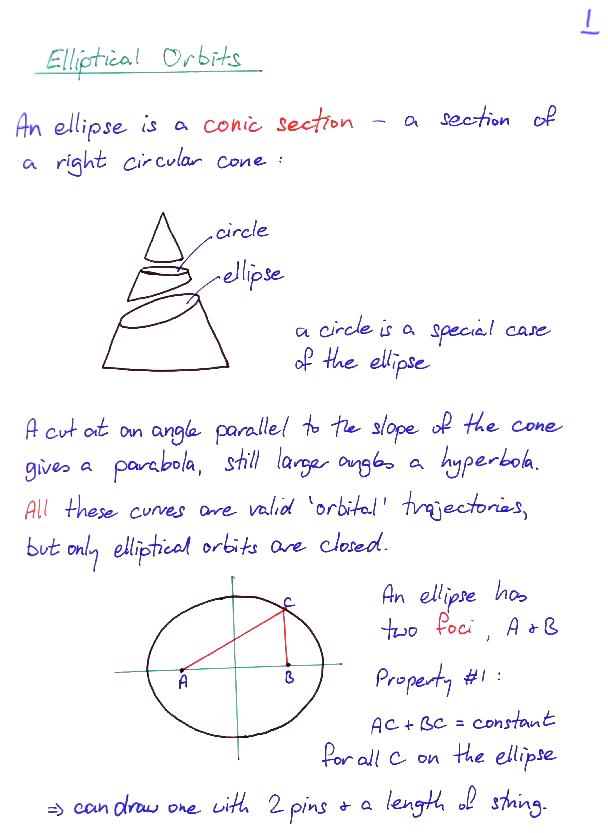
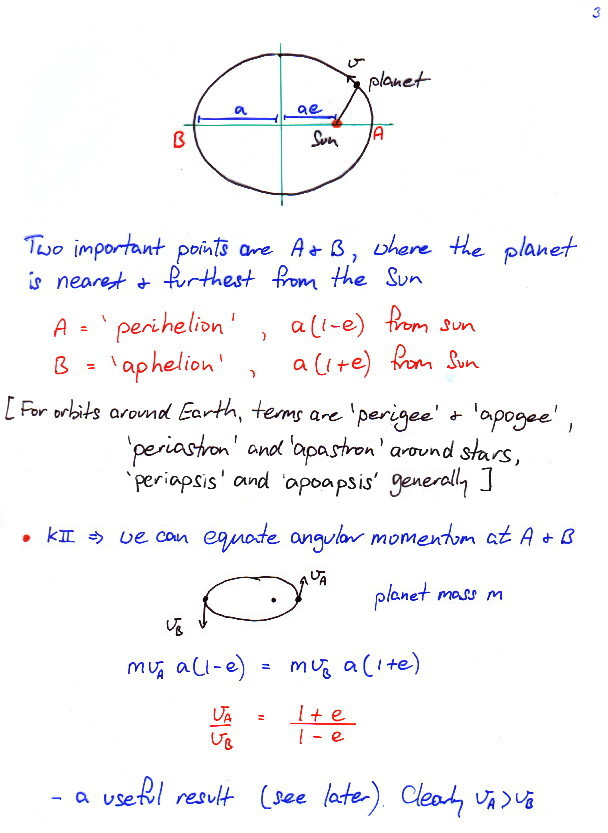
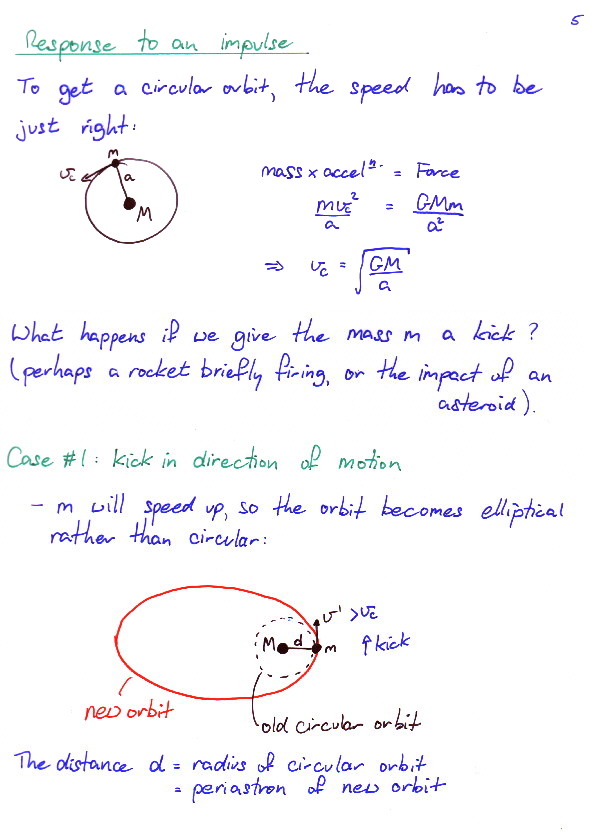
Elliptical orbits Conic sections (ellipse,
circle, hyperbola);
properties of the ellipse; aphelion and perihelion; response of orbits
to an impulse; semi-latus rectum
Pictures: [ conic sections
| comet Encke ]
Animation: [ comet
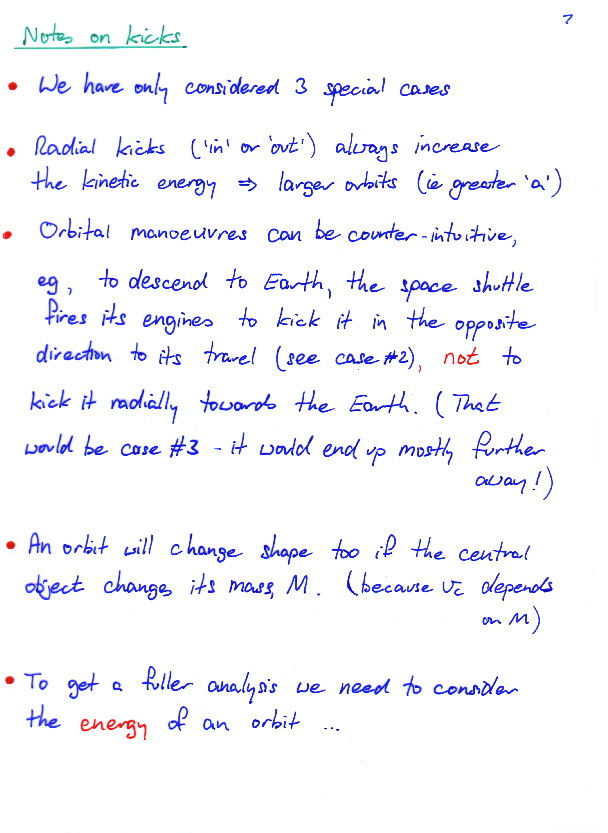
Encke comet 67P | kick simulation ]
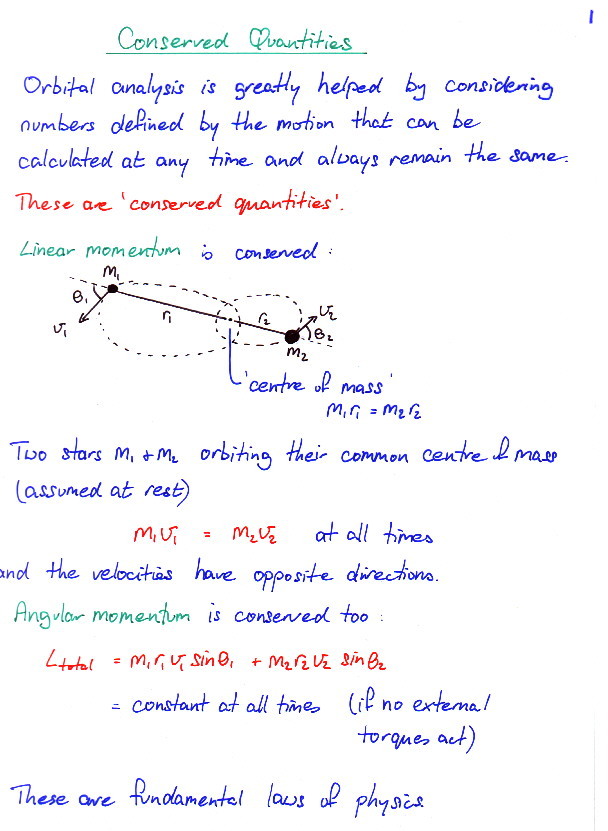
Conservation laws Idea of conserved quantities;
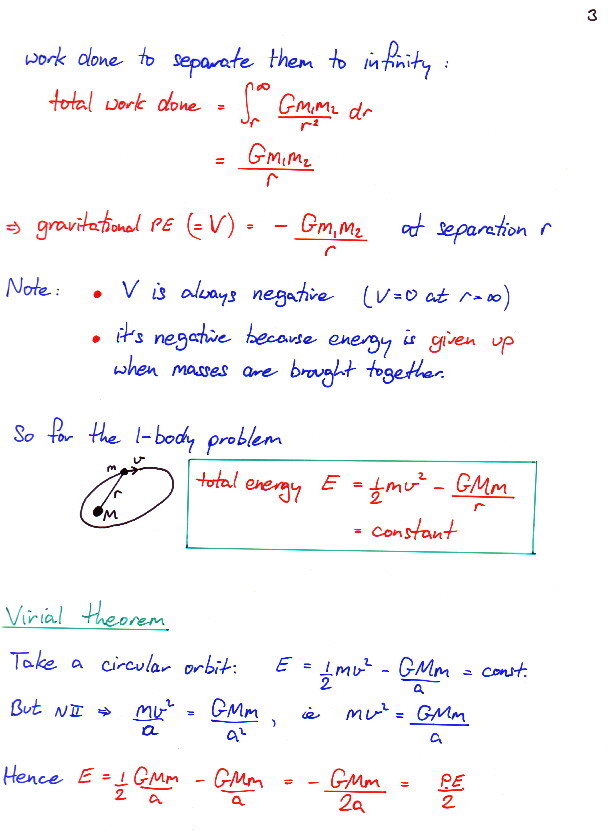
energy; momentum; angular momentum; gravitational potential
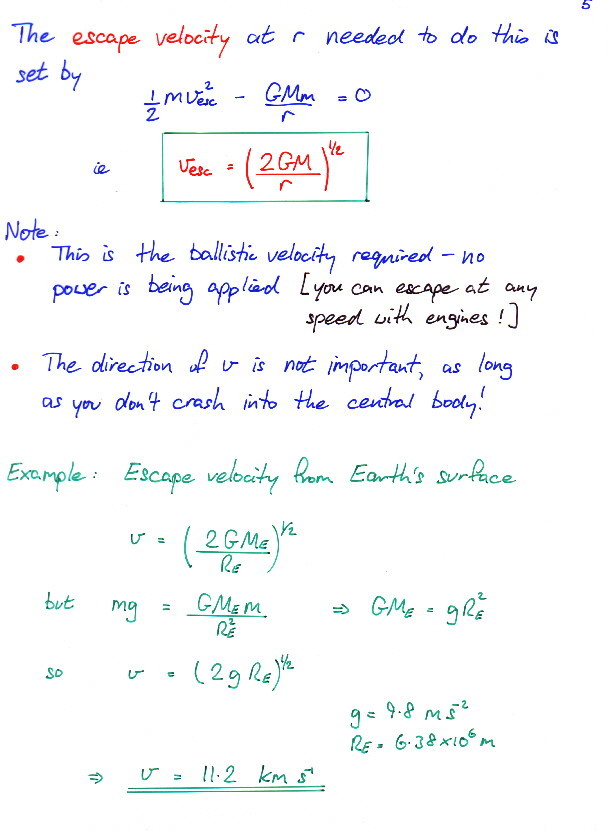
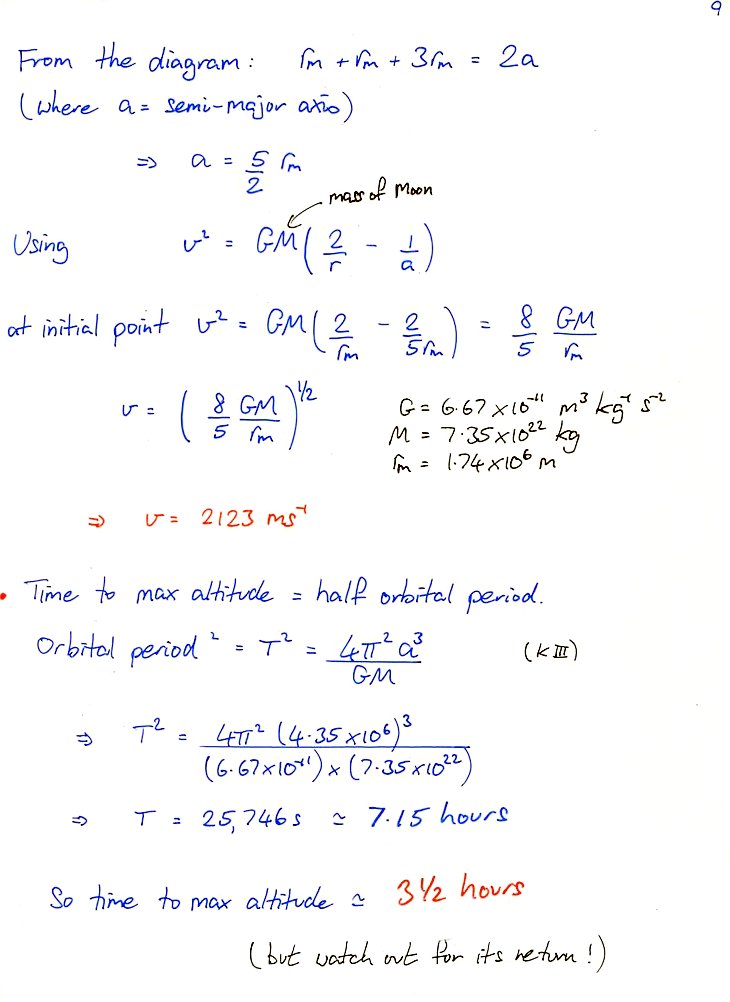
energy (general and at small heights); virial theorem; escape speed;
orbital velocity law derived
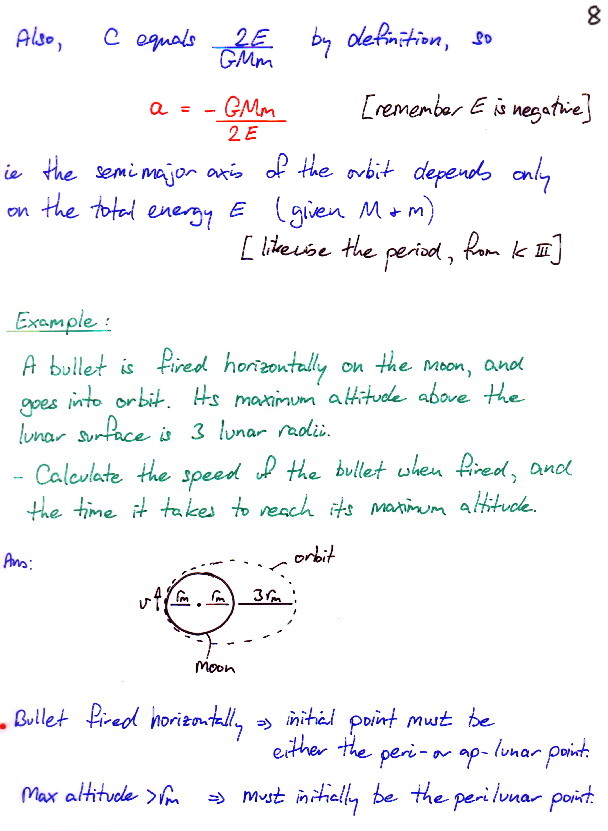
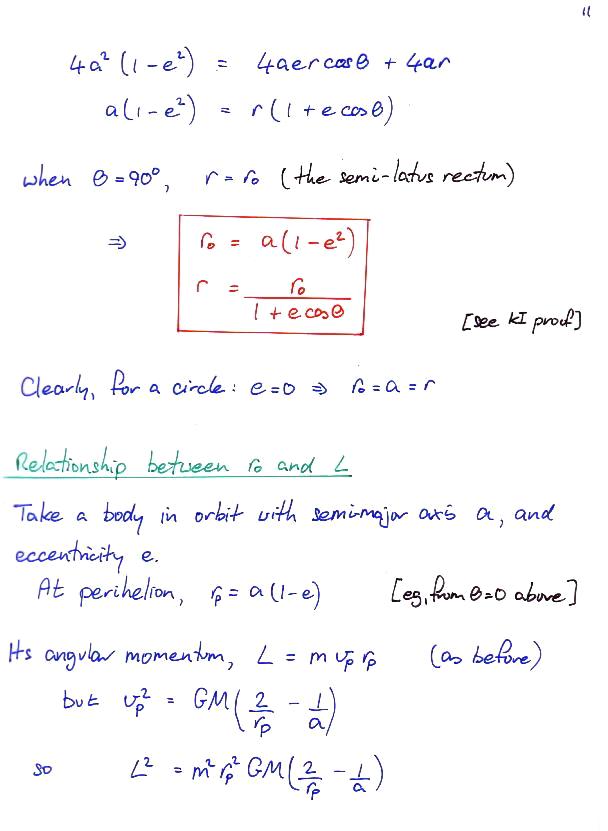
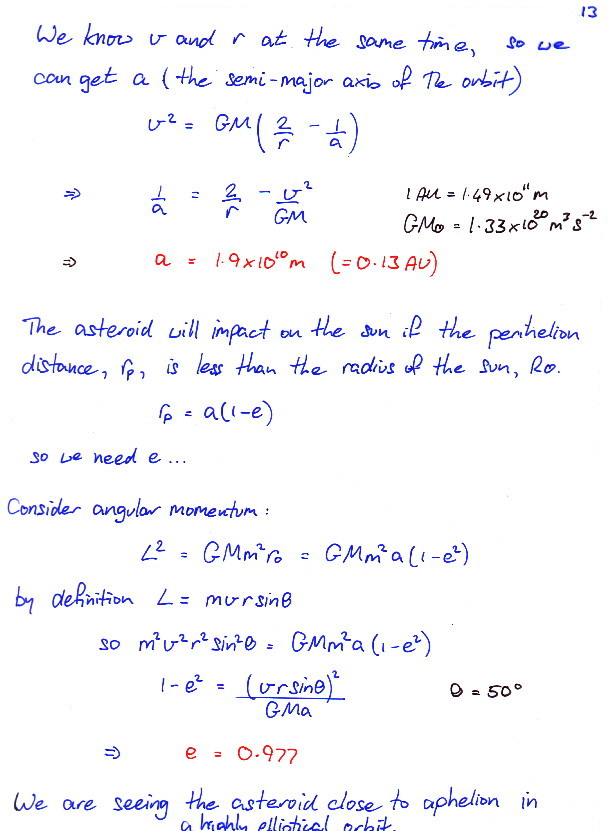
Applications Relationship between semi-major axis
and energy; equation of the ellipse; proof of K1; relation between
angular momentum and semi-latus rectum
Handouts: [ Kepler's laws
from Newtonian dynamics
(not examinable)]
Links: [Emmy
Noether | GW150914
(orbit decays because of gravitational waves) ]
Animation: [ escape speed simulation ]
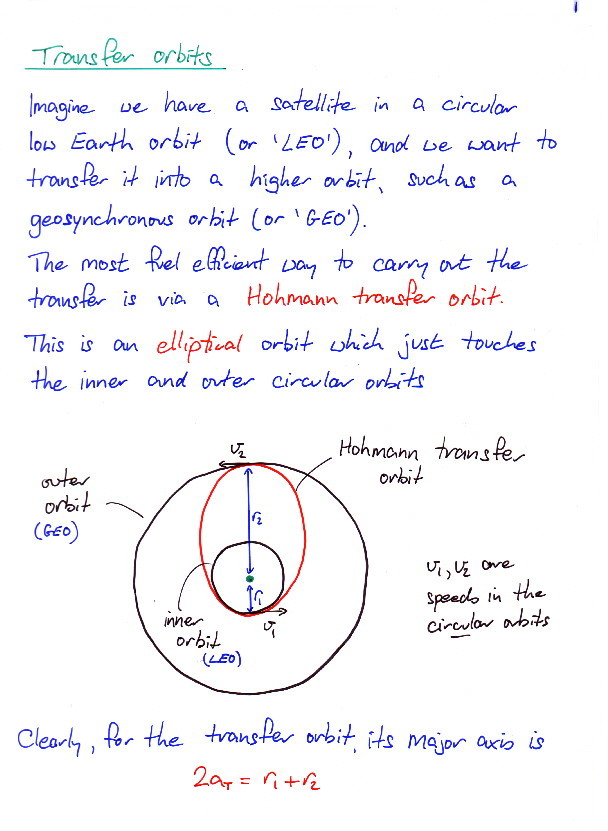
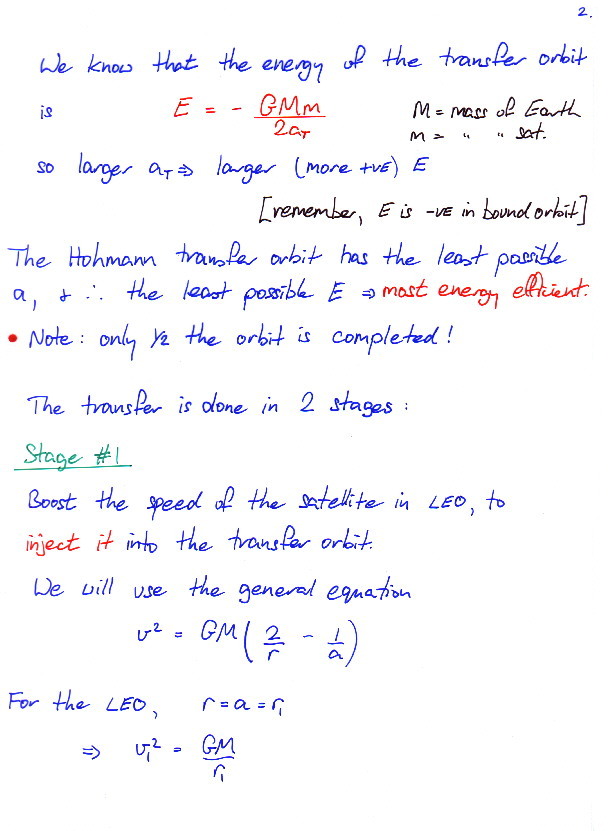
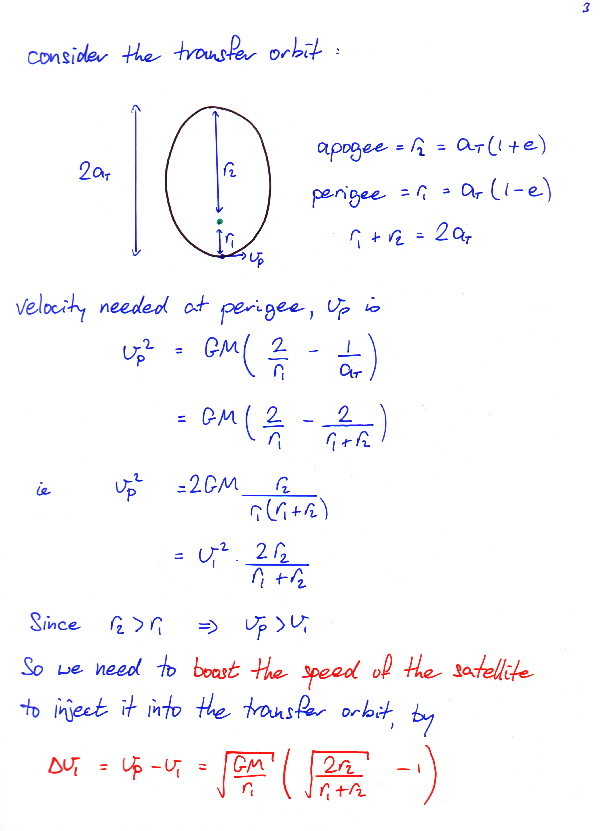
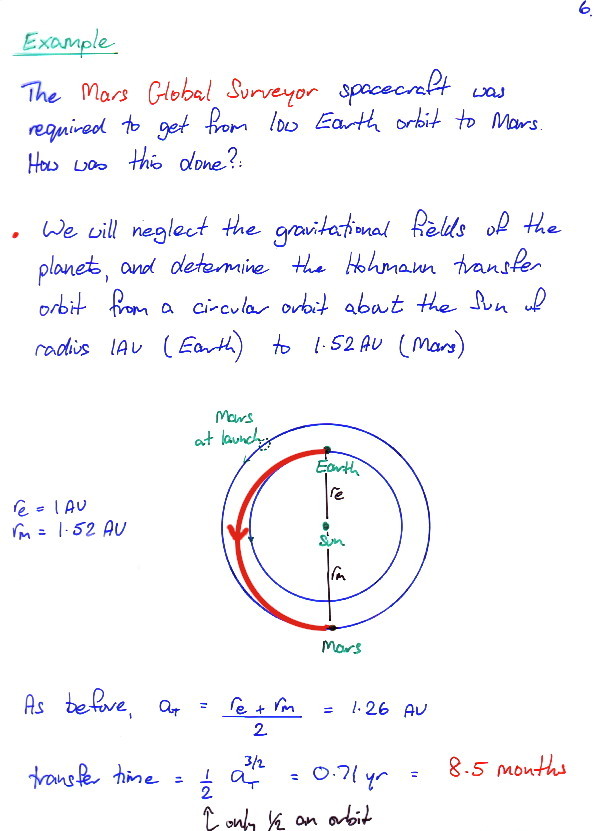
Hohmann transfer orbits As the 'most efficient'
transfer orbit;
example of LEO-->GEO; transfer times and delta-vees; example of
Earth-->Mars
transfer
sites: [ Perseverance’s Route to Mars (transfer orbit example)]
Picture: [Exomars
transfer orbit | Maven
transfer orbit | Venus
Express transfer orbit ]
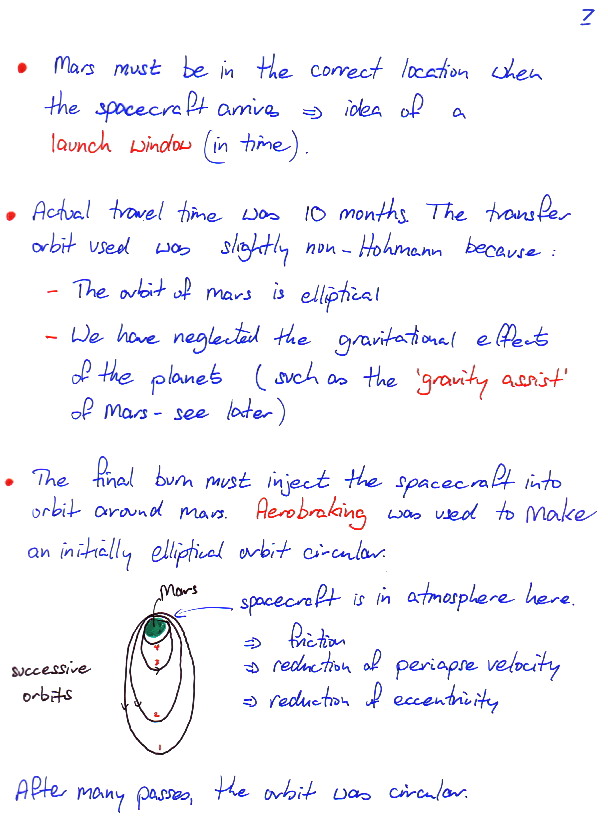
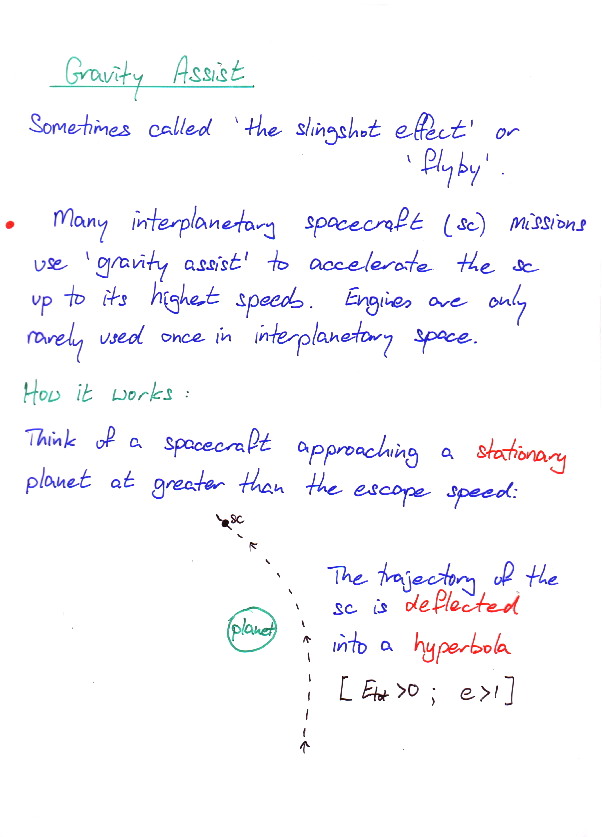
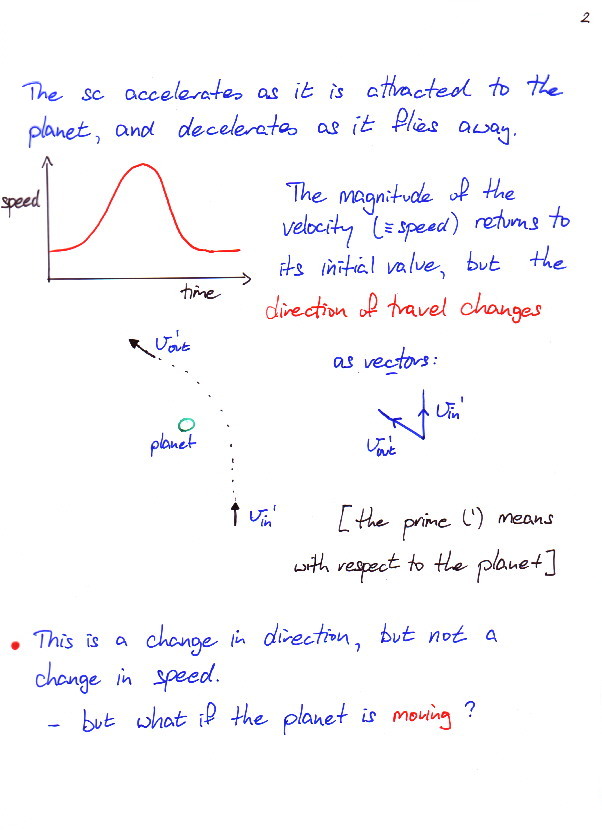
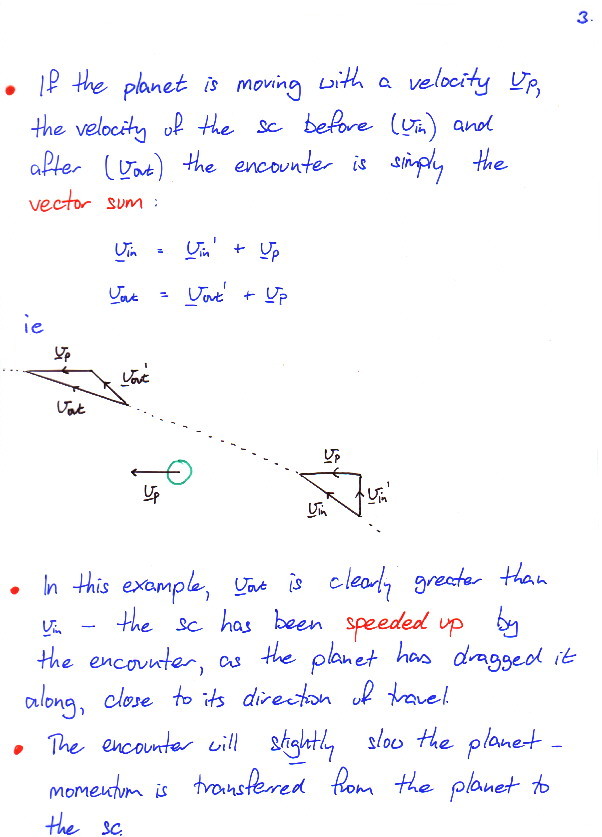
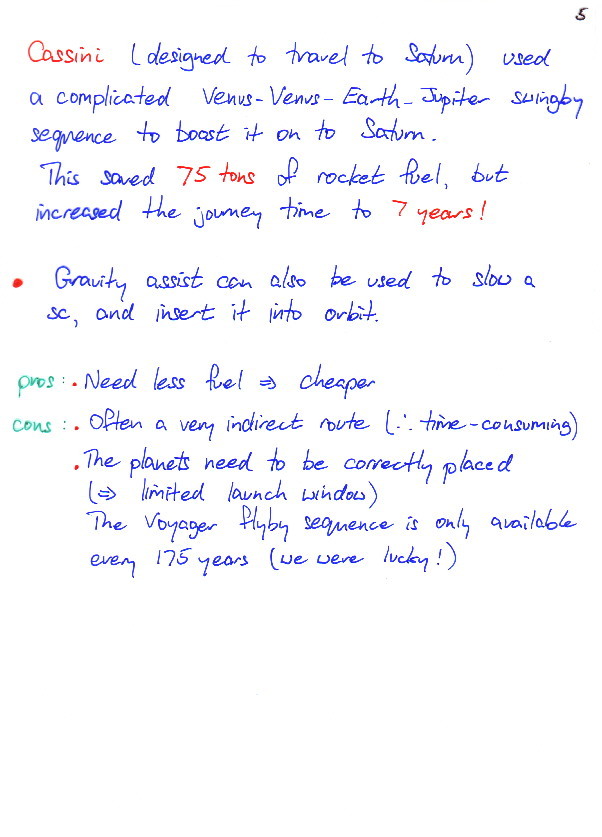
Rockets Gravity assist; examples of
Voyager and Cassini;
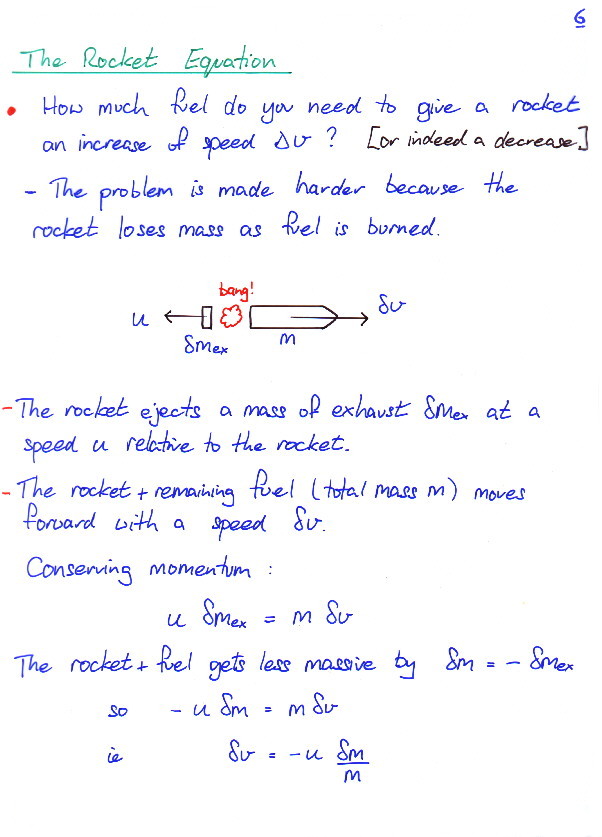
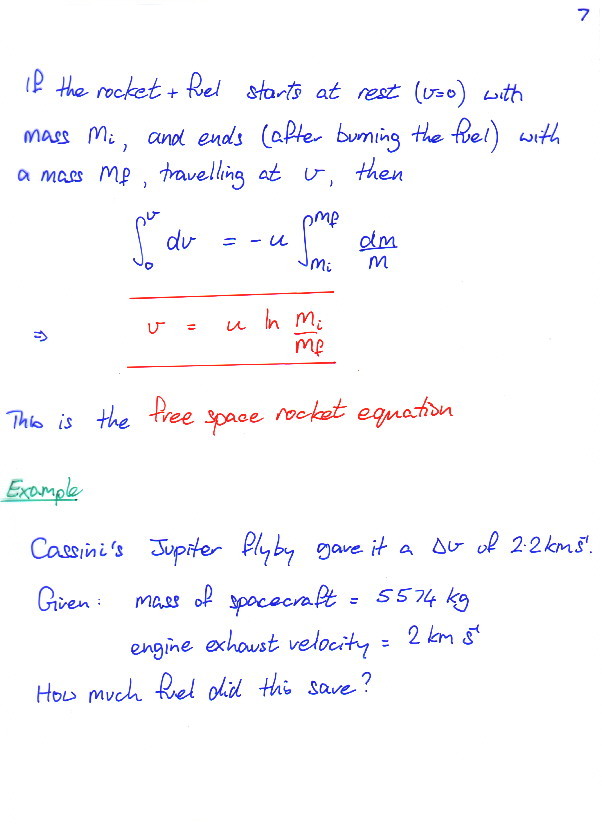
the rocket equation
Pictures: [ Cassini | Cassini
flightpath ]
Links: [JPL Horizons and coding examples (in Python)]
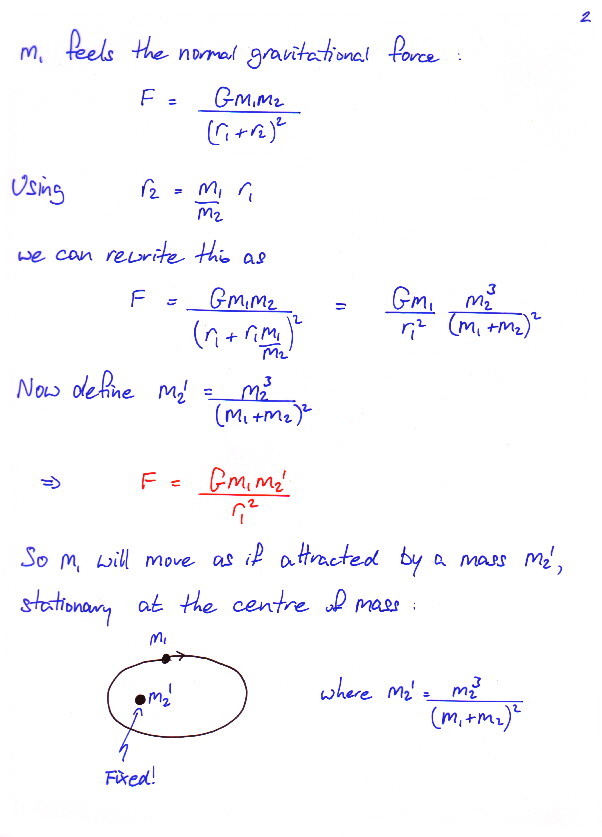
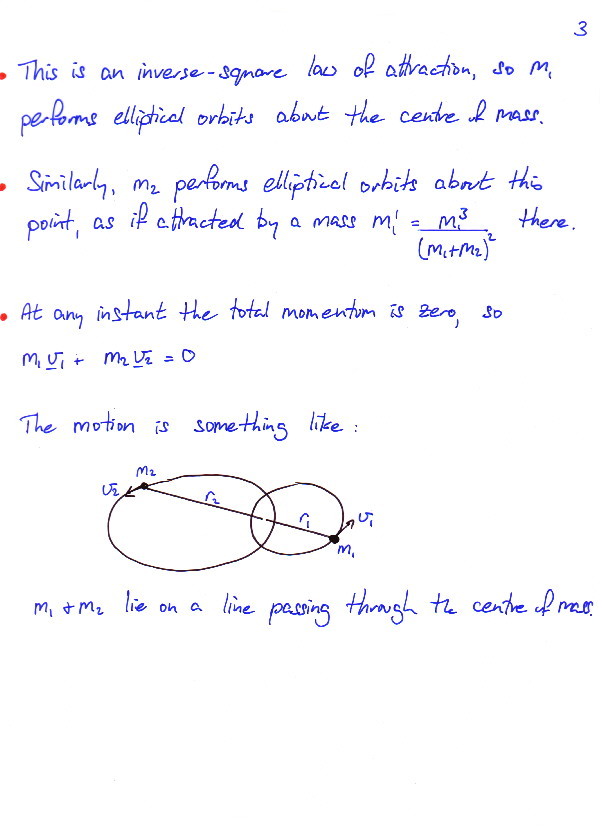
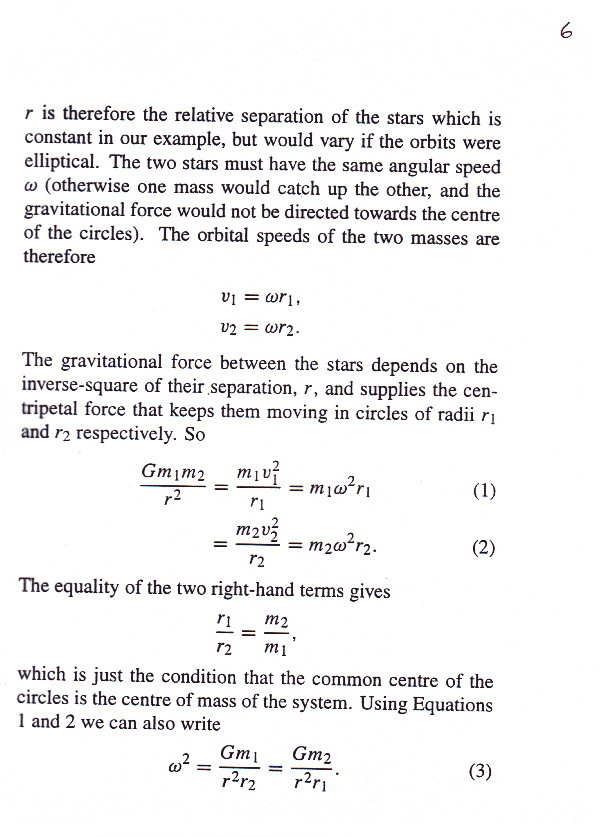
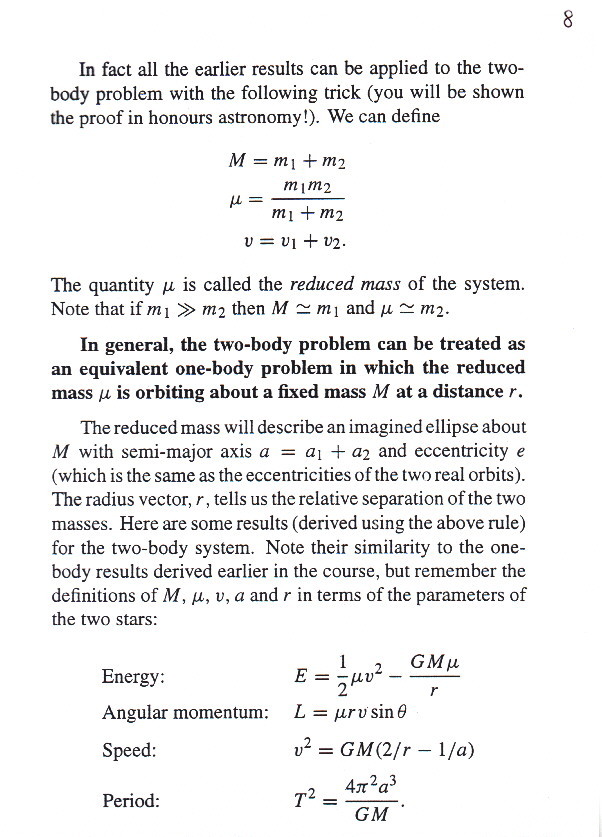
The two-body problem Form of two-body
orbits; relative
motion; reduced mass and radius vector
Handouts:[ quick facts #2:
The two-body problem ]
Example
exam questions and answers with hints and tips
Learning Objectives: On completion of this course,
the student should be able to apply the basic concepts of Newtonian
gravitation and motion and use these concepts quantitatively.
In particular the student will be able to carry out dynamical
calculations for planetary, stellar and spacecraft orbits corresponding
to the planar 1 and 2 body problems.
Books
There is no single textbook which is an
essential purchase for this module. However An
Introduction to Modern Astrophysics, B W Carroll and D A Ostlie,
Addison Wesley is strongly recommended, and is
essential for the Astronomy 2 course It has its own website
here. Its approach is in places more advanced than required
for A1, however there is much useful material in it.
Astronomy
- Principles and Practice, 4th Edition, A E Roy & D
Clarke, IoP Publishing will also be of great help. This is
also useful for positional astronomy and instrumental courses.
For wider background reading,
students may find the following list useful: